

Frozen Shoulder Acupuncture and Physiotherapy
- 6 days ago
- 6 min read
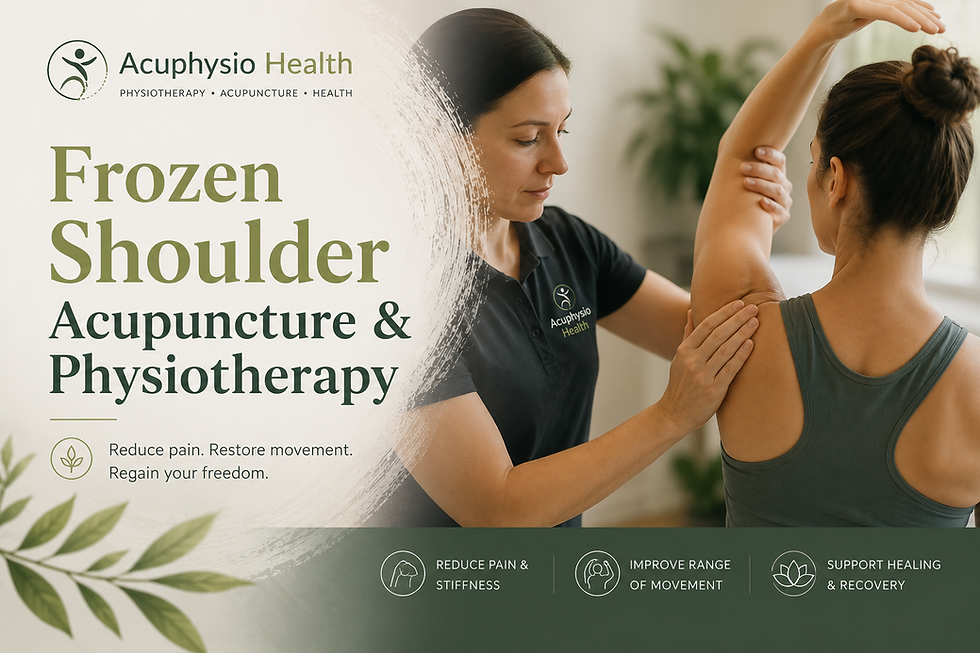
A shoulder that once reached the top shelf without a thought can suddenly make dressing, driving, or sleeping feel like hard work. Frozen shoulder acupuncture and physiotherapy treatment is often most helpful when pain and stiffness start taking over daily life, because this condition rarely improves quickly on its own.
What frozen shoulder actually feels like
Frozen shoulder, also called adhesive capsulitis, is more than a sore shoulder. It usually develops gradually, with pain first and increasing stiffness after that. Many people notice simple movements becoming difficult - reaching behind the back, lifting the arm overhead, fastening a bra, putting on a shirt, or even finding a comfortable sleeping position.
The condition tends to move through stages. In the early stage, pain is often the main problem. Later, stiffness becomes more obvious and range of motion drops. Eventually, movement may slowly return, but that process can take many months and sometimes longer. That is why early support matters. Waiting it out can leave people struggling for far longer than necessary.
Frozen shoulder is more common in adults between 40 and 60, and it can show up after an injury, surgery, or a period of reduced shoulder use. It is also more common in people with diabetes and some other health conditions. In some cases, there is no clear trigger at all.
Why frozen shoulder acupuncture and physiotherapy treatment works well together
Frozen shoulder can be stubborn because it is not just a strength issue and not just an inflammation issue. The shoulder capsule becomes irritated and tight, movement changes, muscles around the joint start guarding, and pain can make the whole area even more reactive. A combined approach often works well because it addresses several parts of the problem at once.
Physiotherapy focuses on restoring movement, improving joint function, and helping you use the shoulder more normally again. Acupuncture can help reduce pain, calm muscle tension, and support the body’s recovery response. When used together, treatment is often more tolerable than pushing through exercises alone.
This matters because frozen shoulder rehab needs a measured approach. If treatment is too aggressive, symptoms can flare. If it is too passive, stiffness can linger. The right balance depends on your stage of recovery, your pain levels, and how restricted the shoulder has become.
How physiotherapy helps a frozen shoulder
Physiotherapy for frozen shoulder starts with understanding what stage you are in. In the painful stage, the goal is usually to settle irritation and keep the shoulder moving as much as it reasonably can. In the stiffer stage, treatment may shift towards gently improving joint mobility, stretching the right structures, and rebuilding function.
Hands-on treatment can help reduce guarding around the shoulder and upper back. Joint mobilisation techniques may be used to improve how the shoulder moves, but these need to be applied carefully. More force does not always mean better results. A shoulder that is highly irritated often responds better to steady, well-judged treatment than to anything too forceful.
Exercise is still a key part of recovery, but the exercises need to match the person. Pendulum movements, assisted range of motion work, postural correction, scapular control, and gradual strengthening can all play a role. The important part is progression. If exercises are too easy, progress may stall. If they are too hard, pain can increase and confidence can drop.
A good physiotherapy plan also looks beyond the shoulder joint itself. The neck, upper back, ribcage, and shoulder blade mechanics can all influence how the shoulder feels and functions. When these areas are stiff or overloaded, the shoulder often has to work harder.
What acupuncture can add to treatment
Acupuncture is often used to help manage pain and muscle tension around the shoulder, neck, and upper back. For people with frozen shoulder, that can make a real difference. Less pain often means better sleep, easier day-to-day movement, and a greater ability to participate in physiotherapy exercises.
From a Traditional Chinese Medicine perspective, pain and restricted movement may reflect blockage or imbalance in the body’s pathways. Treatment aims to improve circulation of qi and blood, reduce stagnation, and support healing. From a modern clinical perspective, acupuncture may help by influencing pain signalling, reducing local muscle tightness, and encouraging a calmer nervous system response.
The practical benefit is often simple - when pain settles, movement becomes more possible. That does not mean acupuncture replaces rehabilitation. It works best as part of a broader plan. If the shoulder is less guarded after treatment, physiotherapy can often be more effective.
Some people respond quickly to acupuncture, while others improve more gradually. It depends on how long symptoms have been present, how severe the stiffness is, and what else is happening in the body. A shoulder that has been tightening for months will not usually change after one session. Consistency matters.
What a combined treatment plan may look like
A combined frozen shoulder acupuncture and physiotherapy treatment plan is usually built around pain reduction first, then progressive movement restoration. In the early phase, sessions may focus on settling the shoulder enough that you can sleep better, move more comfortably, and begin gentle exercises.
As symptoms become more manageable, treatment often shifts towards improving range of motion and function. This can include manual physiotherapy, tailored home exercises, acupuncture, and advice about pacing. The home program matters because recovery happens between appointments as much as during them.
You may also be guided on simple changes to avoid aggravating the shoulder. That could mean modifying how you reach, lift, or work at a desk. It does not mean avoiding movement altogether. In fact, complete rest usually does not help frozen shoulder. The goal is smart movement, not no movement.
At a clinic like AcuPhysioHealth, the advantage of integrated care is that the treatment pathway can be adjusted without splitting your care between completely separate providers. If pain is the main barrier, acupuncture may be emphasised more at first. If stiffness is becoming the dominant issue, physiotherapy input may take the lead. Most people benefit from both.
How long recovery usually takes
This is the part many people want a straight answer on, and the honest answer is that it varies. Frozen shoulder often takes months rather than weeks to improve. Some people recover steadily over time with conservative treatment. Others need a longer plan, especially if the condition is advanced, highly painful, or linked with other health factors.
The good news is that treatment can make the process more manageable and often more efficient. Even when full resolution takes time, reducing pain, improving sleep, and restoring practical movement earlier can have a big effect on quality of life.
Progress is rarely perfectly linear. One week may feel better, the next may feel tight again. That does not always mean treatment is failing. It often means the shoulder is still in a reactive phase and needs the program adjusted.
When to get assessed
If shoulder pain and stiffness have been building for several weeks, or if your movement is clearly getting worse, it is worth getting assessed. The same applies if pain is waking you at night, if reaching overhead or behind your back has become difficult, or if you are recovering from an injury and the shoulder is not loosening up as expected.
Not every stiff shoulder is frozen shoulder. Rotator cuff problems, bursitis, arthritis, referred neck pain, and post-injury restriction can look similar at first. A proper assessment helps make sure the treatment matches the real cause.
That is especially important if symptoms came on after trauma, if weakness is severe, or if pain is constant and unusual. Frozen shoulder is common, but it should not simply be assumed.
The value of a holistic approach
When people are frustrated by recurring pain, they often need more than a generic sheet of exercises. Frozen shoulder affects sleep, work, driving, parenting, and mood. A holistic treatment approach takes that seriously. It looks at the irritated joint, the surrounding muscles, the nervous system response to pain, and the day-to-day habits that may be making the problem harder to shift.
That is why integrated care can feel different. Instead of treating pain relief and rehabilitation as separate jobs, the aim is to combine them so each part supports the other. For many people, that means better tolerance to treatment, better follow-through with exercises, and a more sustainable recovery path.
If your shoulder has been getting stiffer, more painful, or harder to trust, the best time to act is usually before it settles into a long pattern. The earlier you calm the pain and start restoring movement in the right way, the better chance you have of getting back to normal life with less frustration.


Comments